









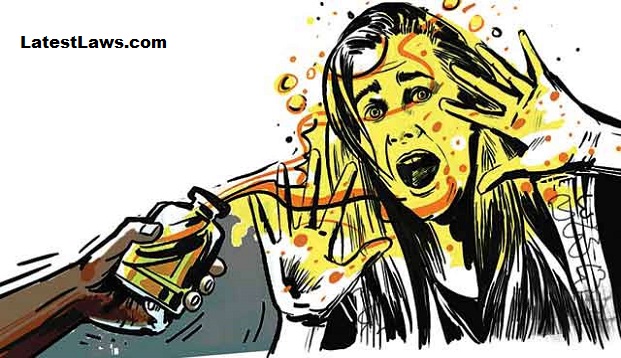
The High Court of Judicature at Allahabad, in a strongly-worded order dated May 14, 2026, summoned the Principal Secretary (Home) and the Principal Secretary, Department of Women and Child Welfare, Government of Uttar Pradesh, after expressing deep displeasure over the State's continued failure to formulate a comprehensive policy for the compensation, rehabilitation and long-term support of acid attack survivors. The court reprimanded Government by stating,
“Where such horrific offences occur resulting in permanent devastation of a citizen's life, the constitutional obligation of the State does not end with prosecution of the offender alone. The State is equally obliged to ensure meaningful rehabilitation and adequate restorative support so that victims of such crimes are able to live with dignity guaranteed under Article 21 of the Constitution of India.”
The Division Bench of Hon'ble Justice Saral Srivastava and Hon'ble Justice Garima Prashad was hearing a writ petition filed by Faraha, an acid attack survivor who was merely 24 years of age at the time of the incident and had received only Rs. 6 lakhs in aggregate over nearly nine years — comprising Rs. 5 lakhs under the Victim Compensation Scheme and Rs. 1 lakh from the PM National Relief Fund.
The petitioner's counsel contended that despite a representation made to the Secretary, U.P. State Legal Services Authority on July 26, 2025, no decision had been taken, and that the compensation paid was wholly inadequate considering the lifelong physical, psychological, social and economic consequences borne by the survivor.
The State, represented by learned Additional Advocate General Sri Manish Goyal, submitted that the Home Department and the Department of Women and Child Welfare were actively deliberating on formulation of a comprehensive policy. The Court, however, found the affidavit filed by the Additional Chief Secretary (Home) to be devoid of any concrete policy framework, proposed timelines, rehabilitation mechanism, financial structure or identifiable measures. The Court observed that the documents placed merely reflected broad inter-departmental discussions with nothing actionable on record.
The Court placed strong reliance on the Supreme Court's landmark decision in Parivartan Kendra v. Union of India, (2016) 3 SCC 571, where the apex court had awarded Rs. 10 lakhs to a victim while holding that compensation in acid attack cases cannot be confined to a symbolic or rigid amount and must account for lifelong suffering, continuing medical expenditure, social stigma, loss of dignity and inability to lead a full life. The Court further invoked Article 21 of the Constitution, observing that the State's constitutional obligation under List II of the Seventh Schedule does not end with prosecution of the offender — it equally extends to ensuring meaningful rehabilitation and restorative support so that survivors can live with dignity.
The Court summoned both officers to appear on May 25, 2026 with concrete instructions on the policy framework for compensation and rehabilitation, the mechanism for medical treatment and reconstructive surgeries, psychological counselling, education and employment assistance, and the manner in which compensation is to be rationalised keeping in view the nature, extent and lifelong consequences of injuries.
Case Details:
Case No.: WRIT-C No. 5503 of 2026
Bench: Hon'ble Justice Saral Srivastava & Hon'ble Justice Garima Prashad
Petitioner: Faraha
Respondents: State of U.P. & 2 Others
Petitioner's Counsel: Ali Qambar Zaidi, Mohammad Danish, Mohammad Iliyas
Respondents' Counsel: C.S.C., Shreesh Srivastava
Picture Source :




















